
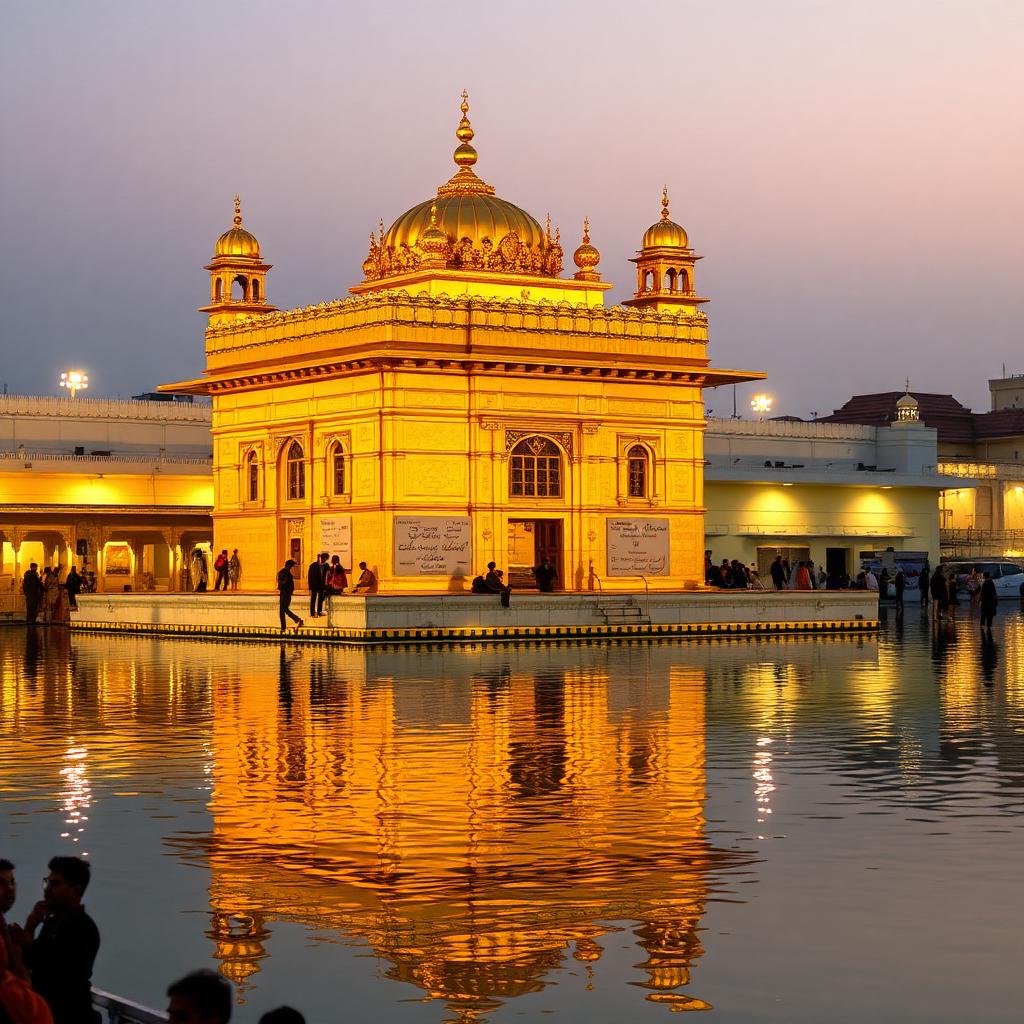
Amritsar – Wagah Border tour package.
Spiritual devotion and patriotic pride in Punjab
Why travellers book this route.
This package is designed for travellers looking for a smooth, well-planned route with comfortable stays, clear pricing and a travel team that understands the destination.
Tour Image Gallery
About the Journey
Amritsar, the spiritual and cultural heart of Punjab, is home to the majestic Harmandir Sahib, globally known as the Golden Temple. This sacred city is a place of deep devotion, historic significance, and patriotic fervor. The Golden Temple, surrounded by the peaceful Amrit Sarovar (pool of nectar), shines with real gold and serves as the ultimate spiritual sanctuary. Beyond its religious importance, Amritsar carries the memories of India's independence struggle at Jallianwala Bagh and the emotional history of Partition at the Partition Museum. The tour also takes you to the Wagah-Attari Border, the only road border crossing between India and Pakistan, to witness the spectacular Beating Retreat Ceremony. Here, soldiers from both nations perform a high-stepping, energetic drill filled with dramatic gestures and patriotic slogans, creating an electric atmosphere of national pride. Our 3-day tour package from Kanpur offers a well-planned itinerary to experience the rich heritage, deep spirituality, and legendary culinary culture of Punjab.
History & Heritage
Amritsar was founded in 1577 by Guru Ram Das, the fourth Sikh Guru, who excavated the holy pool of Amrit Sarovar, from which the city derives its name. The fifth Guru, Guru Arjan Dev, designed the Harmandir Sahib to be built in the center of the pool, symbolizing the accessibility of God to everyone. He also installed the Adi Granth, the holy scripture of Sikhism, within the temple. In the early 19th century, Maharaja Ranjit Singh, the founder of the Sikh Empire, patronized the gold plating of the temple's upper storeys, giving it the name Golden Temple. Amritsar has also been a focal point of modern Indian history. In 1919, the tragic Jallianwala Bagh massacre occurred here, when British forces under General Dyer fired on a peaceful gathering of civilians, sparking a national movement for independence. During the Partition of India in 1947, Amritsar became the primary entry point for millions of refugees crossing the newly drawn border, a painful history preserved in the city's museums.
Cultural & Spiritual Significance
The Harmandir Sahib is a symbol of absolute equality and human brotherhood. Unlike traditional temples, it is built on a lower level than the surrounding land, signifying humility. It features four entrance doors facing north, south, east, and west, welcoming people of all faiths, castes, and backgrounds without discrimination. The temple runs the Guru ka Langar, the world's largest free community kitchen, feeding over 100,000 people daily. The food is strictly vegetarian and prepared by volunteers (sevadars), representing the core Sikh values of selfless service and equality. The Wagah Border ceremony is highly significant as a peaceful show of military power, representing the shared history, rivalry, and hope for peace between India and Pakistan.
Top Attractions & Landmarks
Golden Temple (Harmandir Sahib)
The most sacred Sikh shrine, built in the middle of a holy pool. The gold-plated structure features a blend of Hindu and Islamic architectural elements, housing the holy Guru Granth Sahib.
Jallianwala Bagh
A historic public garden housing a memorial to the victims of the 1919 massacre. The bullet-ridden walls, the martyrs' well, and the flame of liberty stand as a tribute to the freedom fighters.
Wagah-Attari Border
Located 30 km from Amritsar, this is the border post where the daily Beating Retreat ceremony is held by the Indian Border Security Force and Pakistan Rangers.
Partition Museum
Housed in the historic Town Hall, this is the world's first museum dedicated to the Partition of 1947, showcasing personal stories, photographs, and historical documents.
Gobindgarh Fort
A historic 18th-century fort built by the Bhangi rulers and later fortified by Maharaja Ranjit Singh. It features museums showcasing traditional weapons, coins, and a popular 7D show on the history of Punjab.
Hidden Gems & Local Secrets
Pul Kanjari
A historic trading outpost built by Maharaja Ranjit Singh near the border, featuring a temple, a mosque, a water tank, and beautiful wall paintings, reflecting secular harmony.
Ram Tirath Temple
An ancient pilgrimage site believed to be the location of Sage Valmiki's ashram, where Goddess Sita lived during her exile and Luv-Kush were born.
Durgiana Temple
A beautiful Hindu temple dedicated to Goddess Durga, built in the middle of a holy lake with a gold-plated dome, closely resembling the architecture of the Golden Temple.
Day-by-Day Itinerary
Drive Kanpur to Amritsar & Night Darshan
Depart Kanpur early morning, drive to Amritsar (approx 12-13 hours). Check into your hotel. In the evening, visit the Golden Temple to witness the beautiful night lighting and the sacred Palki Sahib ceremony where the holy book is put to rest. Overnight stay.
History & Wagah Border Ceremony
After breakfast, visit Jallianwala Bagh and the moving Partition Museum. Post-lunch, drive to the Wagah-Attari Border (30 km). Secure your seats early and witness the patriotic Beating Retreat ceremony. Return to the city for a food walk. Overnight stay.
Local Fort, Temples & Return Drive
Visit the Gobindgarh Fort, Durgiana Temple, and the historic Ram Tirath temple. Spend the afternoon shopping in the old bazaars. Begin your return journey to Kanpur by evening, arriving home on Day 4.
"Our Kashmir trip was effortless. The Innova was spotless, the driver knew every shortcut, and the itinerary felt personal."
"Rudra handled our destination wedding in Udaipur — 14 vehicles, zero stress. Their concierge stayed up with us till 2am."
"Did the Manali–Spiti circuit with a Tempo Traveller. Premium feel, transparent billing, no surprises."
Festivals & Culture
Baisakhi (April) is celebrated with extreme joy across Amritsar, marking the Punjabi New Year and the creation of the Khalsa Panth by Guru Gobind Singh in 1699. Diwali (Bandi Chhor Divas) is a spectacular event when the entire Golden Temple is illuminated with thousands of oil lamps (diyas), accompanied by grand fireworks, celebrating the return of the sixth Guru from Gwalior Fort.
Food & Cuisine
Amritsar is a legendary culinary destination. Try the world-famous Amritsari Kulcha (flaky, butter-laden flatbread stuffed with spiced potatoes and baked in a tandoor, served with chickpea curry), Sarson ka Saag and Makki di Roti, rich Dal Makhani, and Amritsari Fish. Drink sweet, thick Lassi served in tall brass tumblers with a layer of cream, and finish with sweets like Pinni, Gajar ka Halwa, and hot Jalebis.
Shopping Souvenirs
Buy colorful Phulkari embroidered suits, dupattas, and sarees, traditional Punjabi Juttis (handcrafted leather shoes), fine woollen shawls, and brass utensils. Don't forget to buy culinary souvenirs like Amritsari Papad, Warian (spiced sun-dried lentil chunks), and premium qualities of local saffron.
Weather & Climate
The best time to visit Amritsar is from October to March (8°C to 24°C) when the weather is cool, pleasant, and perfect for walking tours. Summers (April to June) are extremely hot (35°C to 45°C), while the monsoon season (July to September) brings high humidity and moderate rainfall.
How to Reach from Kanpur
The road distance from Kanpur to Amritsar is about 850 km via the NH-44 highway. Amritsar is well-connected by direct trains from Kanpur Central and Lucknow. Sri Guru Ram Dass Jee International Airport has flights connecting major Indian cities. Rudra Tours handles all road transfers in comfortable AC vehicles.
Accommodation Info
We arrange comfortable stays in premium hotels near the Golden Temple (like Hyatt Regency or Radisson Blu) or budget-friendly, clean hotels and dharamshalas depending on your preference.
Essential Travel Tips
- •Keep your head covered at all times inside the Golden Temple complex; carry a scarf or handkerchief.
- •Remove your shoes and socks and wash your feet in the water channels at the temple entrance.
- •Arrive at the Wagah Border by 3:00 PM to get good seats in the public stands; avoid carrying bags due to security rules.
- •Photography is permitted in the outer walkways of the Golden Temple but strictly prohibited inside the main inner sanctum.
- •Respect local customs and maintain absolute silence in the prayer halls.
Frequently Asked Questions
Find quick answers to common queries regarding routes, planning, and logistics for this tour.